
Cassava croaker
Pseudotolithus senegalensis (Valenciennes, 1833)
Family Sciaenidae • the coastal drum of river mouths
1 look-alike to know
| French name | Bar. Other names: otolithe du Sénégal, otolithe nain, capitaine (local usage, not to be confused). |
|---|---|
| Scientific name | Pseudotolithus senegalensis (Valenciennes, 1833) |
| Family | Family Sciaenidae |
| English name (FAO) | Cassava croaker |
| Local names | On Ivorian markets and landing sites: “Sosso” (Ouattara et al., 2016). |
| Habitat | Coastal and estuarine marine, demersal. Depth 0 to 70 m. Frequents river mouths and soft bottoms. |
| IUCN status | Endangered (EN, A2bd), IUCN Red List, assessed on 17/03/2020. Harvest with great restraint, release juveniles and breeders. Overexploited species in West Africa. |
How to recognise it
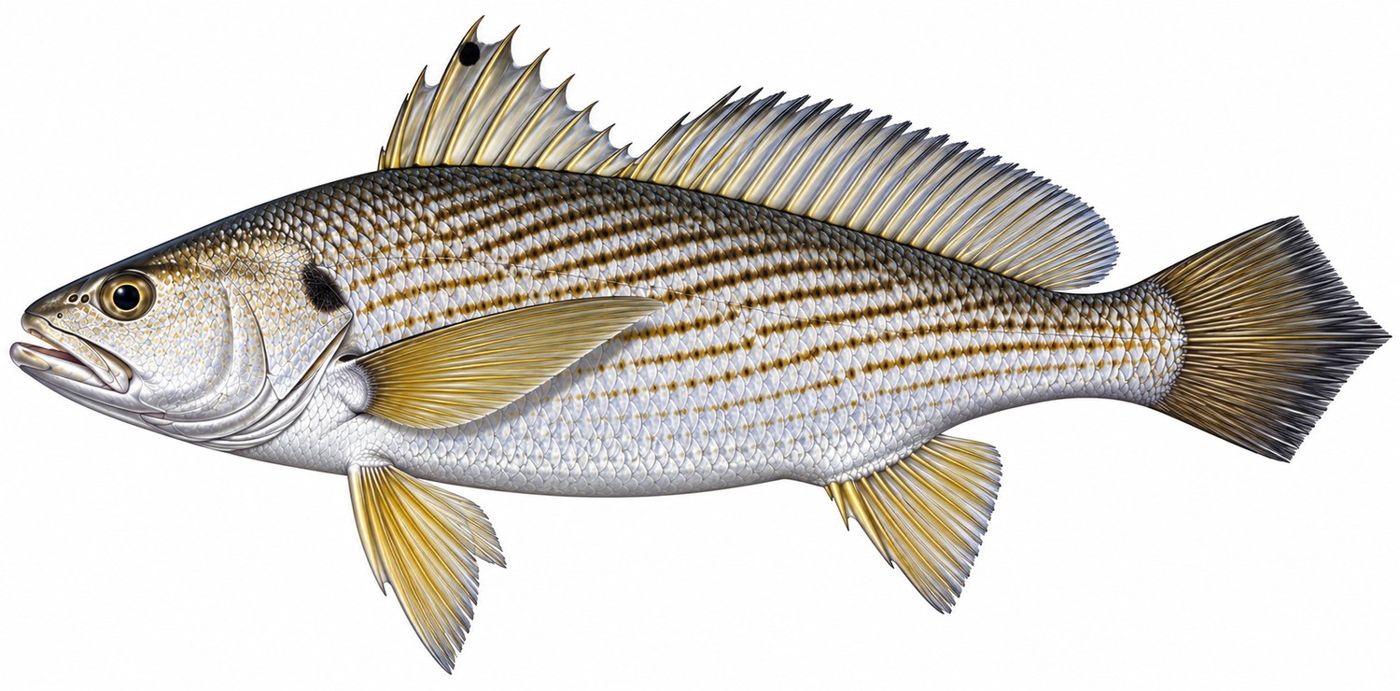
- elongate, compressed body, silvery grey;
- large oblique mouth, protruding lower jaw, a pair of strong median canines in the upper jaw;
- long, deeply notched dorsal fin, 28 to 33 soft rays; anal fin with 2 spines and 7 rays;
- pointed, dark caudal fin; small eyes.
Do not confuse with: Pseudotolithus typus and P. elongatus, told apart by the mouth, teeth and head proportions.
Size
Common size 50 cm; maximum 114 cm (FishBase); usual catches of 1 to 5 kg in Côte d'Ivoire.
Life, fishing and table
Behaviour and ecology
A coastal predator of soft bottoms: it hunts shrimp, crabs and small fish over sand and mud, often near food-rich river mouths. Prefers waters above 16 °C.
Along the Ivorian coast, it frequents the coastal shelf and the Vridi canal area, where lagoon and ocean mix. A major species of demersal fisheries, but in clear decline.
Reproduction and season
Coastal spawning, linked to estuarine inflows. Relatively late maturity for such a targeted fish, which increases its vulnerability to overfishing.
Fishing practice
Techniques, from most to least effective
- By bottom fishing with natural bait (shrimp, piece of fish) over soft bottoms and near river mouths. The top technique.
- By surfcasting with bait from the beaches and the rock breakwaters of the Vridi canal.
- By slow trolling or with soft lures hard on the bottom for active fish.
A solid fight: head down, heavy pulls, the croaker tries to get back to deeper water. Keep in contact, tire it by pumping. When bringing it aboard, beware of the dorsal spines; a landing net is recommended.
Eating quality
Firm, fine white flesh, among the most appreciated of West African coastal fish. Excellent charcoal-grilled (braisé), as fillets or in sauce. Highly sought after on the markets, which explains its overexploitation.
Did you know?
The cassava croaker belongs to the drum family: thanks to specialised muscles that make its swim bladder vibrate, it produces real grunts, especially during the breeding season. Experienced fishers know that these underwater choruses give away the presence of a school. But this emblematic fish of West African coasts is now listed as Endangered: its story is a reminder that no resource is inexhaustible.
Status
Endangered (EN, A2bd), IUCN Red List, assessed on 17/03/2020 (via FishBase, checked on 25/10/2026). Take with great restraint, release juveniles and breeders.
Local names
« Sosso »: markets and landing sites of Côte d'Ivoire (Ouattara et al., 2016); language to be specified.
Sources: FishBase, Pseudotolithus senegalensis (accessed on 25/10/2026); V13 species sheet 75.