
Petite sole (Frechkop's sole)
Microchirus frechkopi Chabanaud, 1952
Family Soleidae • the small wild sole of coastal bottoms
2 look-alikes to know
| French name | Petite sole. Other names: sole sauvage, petite sole d'Afrique. |
|---|---|
| Scientific name | Microchirus frechkopi Chabanaud, 1952 |
| Family | Family Soleidae |
| English name (FAO) | Petite sole (Frechkop's sole) |
| Local names | On Ivorian markets and landing sites: “Sole sauvage” (Ouattara et al., 2016). |
| Habitat | Marine, demersal over sandy and muddy coastal soft bottoms of the shelf. |
| IUCN status | NE Not Evaluated / to be checked. A small coastal fisheries flatfish, poorly documented. |
Identification
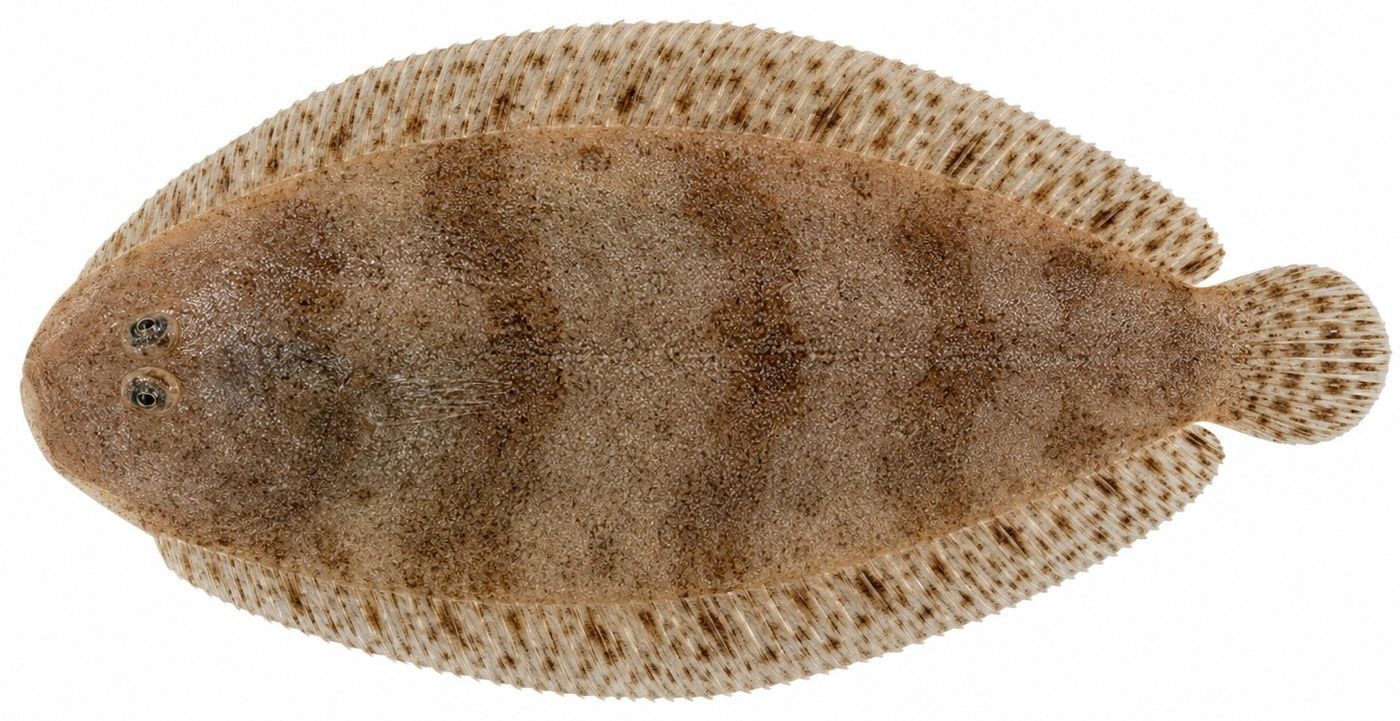
A small true sole with an oval, flat body, both eyes on the right side (as in Soleidae), mottled brownish on the eyed side, pale on the blind side. Small inferior mouth, rounded snout. Fins edged and lined with patterns. Modest size.
Features that never mislead
Oval, flat body, both eyes on the right side.
Eyed side mottled brownish, blind side pale.
Small inferior mouth, rounded snout.
Small size, true sole profile.
Size and weight
A small sole, usual catches of about fifteen to twenty centimetres. Precise maximum size to be confirmed on FishBase.
Behaviour and ecology
A demersal species of soft bottoms, lying flat on sand and mud, often buried during the day. Feeds on small benthic invertebrates. Active mainly at night.
Present over West African coastal soft bottoms. Caught along the Ivorian coast. IUCN status to be checked.
Reproduction and season
Coastal spawning, pelagic eggs and larvae. Flatfish metamorphosis in the young. Local spawning data to be documented.
Fishing practice
Techniques, from most to least effective
In small-scale bottom fishing with fine bait over sandy bottoms.
Caught in coastal trawls and nets.
With a bottom rig at night.
The fight: almost none given its small size, the fish presses itself against the bottom. Mainly a net and trawl catch valued for its flesh.
Eating quality
White, fine and delicate flesh, comparable to that of soles despite its small size. Excellent pan-fried whole. Sought after by connoisseurs. Best eaten fresh.
Sources: FishBase (Microchirus frechkopi, Chabanaud 1952); FAO Eastern Central Atlantic; Ouattara et al. 2016; IUCN status to be reconfirmed.