
Elephant-snout fish
Mormyrus rume Valenciennes, 1847
Family Mormyridae • the elephantfish with a downcurved snout and an electric sense
| French name | Mormyre, elephantfish |
|---|---|
| Scientific name | Mormyrus rume Valenciennes, 1847 |
| Family | Family Mormyridae |
| English name (FAO) | Elephant-snout fish |
| Local names | Elephantfish; local names to be documented |
| Habitat | Freshwater: rivers, floodplain lagoon channels, calm areas with soft bottoms. Demersal. |
| IUCN status | LC Least Concern. |
Identification
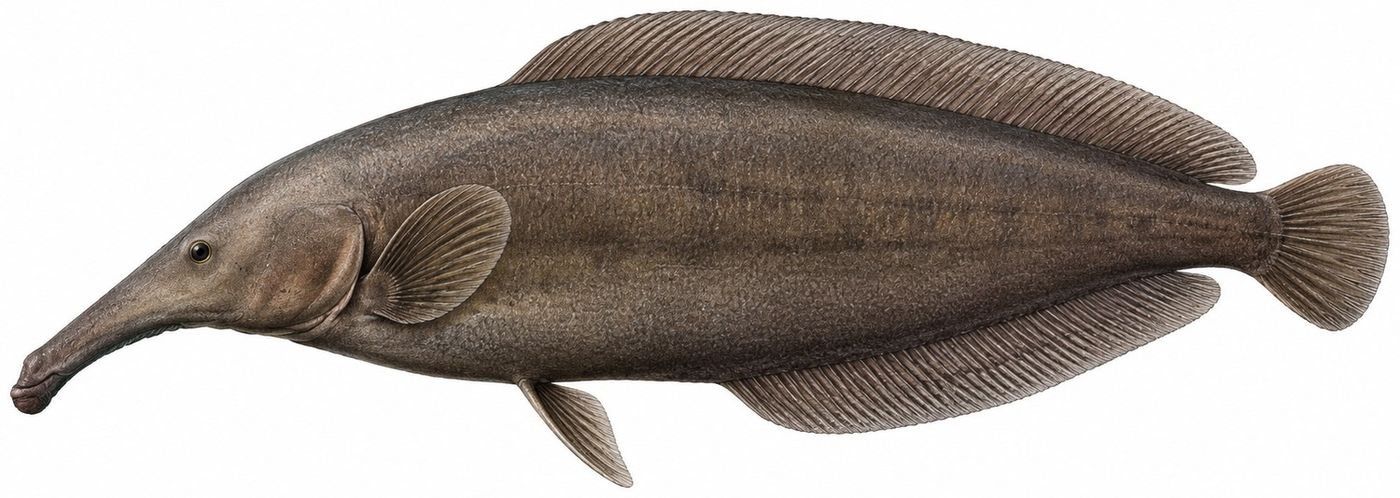
Elongated, compressed body, grey to dark brown, snout extended into a characteristic flexible trunk, with the small mouth at its tip. Long dorsal fin; thin caudal peduncle. Mormyrids produce and sense a weak electric field which they use to find their way and communicate.
Features that never mislead
Snout extended into a downcurved “trunk”, the hallmark of the group.
Grey-black, compressed body with a long dorsal fin and a narrow tail.
Small eye; often swims with the head tilted slightly towards the bottom.
Emits weak electric discharges (undetectable by hand but real).
Size and weight
Usually 25 to 45 cm; published maximum close to 90 cm for the largest mormyrids of the genus.
Behaviour and ecology
Nocturnal burrower: it probes the mud with its trunk to extract worms, insect larvae and small invertebrates, guided by its electric sense in murky water. Large brain (among the most developed in fishes relative to size), linked to processing electric signals.
Reproduction and season
Oviparous, breeds when the water rises in flooded, weedy areas; local spawning migrations in the rainy season.
Fishing practice
Techniques, from most to least effective
Light bottom line, natural bait (worm, larva), in holes and calm backwaters, especially at night. The top technique.
Trap set on soft bottoms.
Small-mesh gillnet in subsistence fishing.
Delicate, subtle bites: the elephantfish nibbles. A lively fight but a modest size. Fragile skin covered in mucus, handle gently.
Eating quality
Fine, prized flesh, slightly oily; much appreciated smoked in many regions. Good grilled and in sauces.
Sources: FishBase (Mormyrus rume, Valenciennes 1847); IUCN Red List (Least Concern); Lévêque & Paugy. Local names to be documented.