
Baliste à taches (Bluespotted triggerfish)
Balistes punctatus Gmelin, 1789
Family Balistidae • the triggerfish studded with blue spots
1 look-alike to know
| French name | Baliste à taches. Other names: baliste ponctué, poisson caoutchouc, baliste bleué. |
|---|---|
| Scientific name | Balistes punctatus Gmelin, 1789 |
| Family | Family Balistidae |
| English name (FAO) | Baliste à taches (Bluespotted triggerfish) |
| Local names | On Ivorian markets and landing sites: “Poisson caoutchouc” (Ouattara et al., 2016). |
| Habitat | Marine, associated with reefs and coastal hard bottoms. A West African species. |
| IUCN status | VU Vulnerable. An exploited species, under pressure on the West African coast. |
Identification
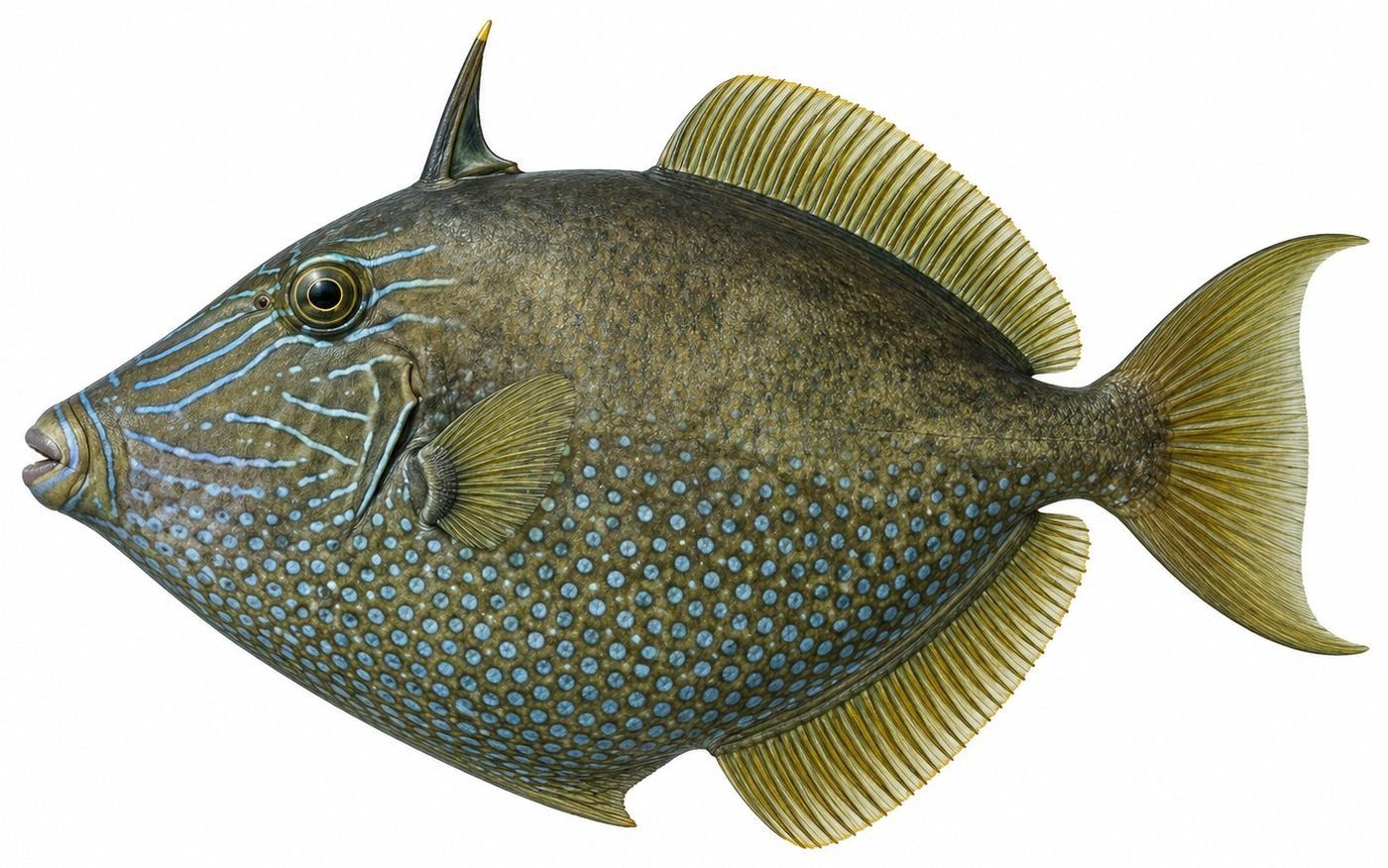
A triggerfish with a deep, strongly compressed body, like the grey triggerfish, but recognisable by its many small blue spots scattered over the body and the base of the fins. Third to sixth rays of the second dorsal fin extended into filaments. Thick skin, powerful beak, same dorsal trigger as its relatives.
Features that never mislead
Many small blue spots on the body and the base of the fins.
Filaments on the front rays of the second dorsal fin.
Deep, compressed body, thick tough skin.
Trigger mechanism on the first dorsal fin.
Size and weight
A triggerfish of similar size to the grey triggerfish, typical catches of a few decimetres. Precise maximum size to be confirmed on FishBase.
Behaviour and ecology
A predator of hard bottoms and reefs that crushes shelled invertebrates, sea urchins and molluscs. Behaviour similar to the grey triggerfish.
Present in the Eastern Atlantic, along the West African coast. Caught over Ivorian hard bottoms. IUCN status: Vulnerable.
Reproduction and season
Like other triggerfishes, probable bottom nesting with egg guarding. Local spawning data to be documented. This nest defence increases its vulnerability.
Fishing practice
Techniques, from most to least effective
Bottom fishing with tough bait over hard bottoms.
Handline fishing near reliefs.
Caught in coastal nets and traps.
The fight: powerful and circling, like that of the grey triggerfish. Same caution when bringing it aboard: pinching beak and raised dorsal spine.
Eating quality
White, firm and fine flesh, excellent once the skin is removed. Increasingly sought after. Preparation requires a good knife.
Sources: FishBase (Balistes punctatus, Gmelin 1789); IUCN Red List (Vulnerable); FAO Eastern Central Atlantic; Ouattara et al. 2016.