
Grass eater (group Distichodus)
Distichodus rostratus Günther, 1864
Family Distichodontidae • the deep-bodied grazer with a pointed snout
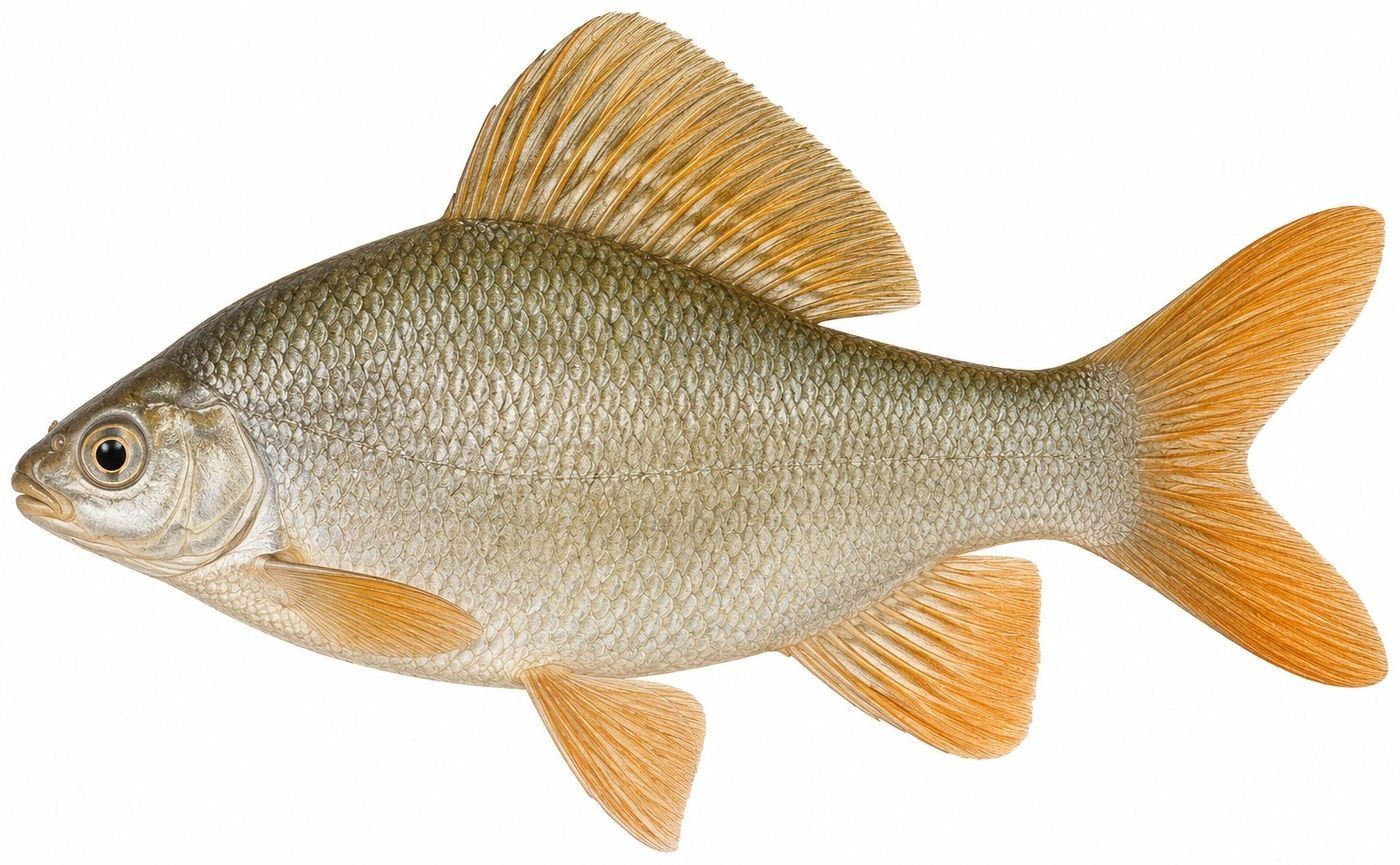
| French name | Long-snouted Distichodus |
|---|---|
| Scientific name | Distichodus rostratus Günther, 1864 |
| Family | Family Distichodontidae |
| English name (FAO) | Grass eater (group Distichodus) |
| Local names | Distichodus; local names to be documented |
| Habitat | Freshwater: rivers, floodplains, weed beds and vegetated edges; demersal to semi-pelagic. |
| IUCN status | LC Least Concern. |
Identification
A fish with a deep, compressed body, silvery to olive, often crossed by dark vertical bars in juveniles, with a clearly elongated, pointed snout bearing a small inferior mouth. Adipose fin present. Fins sometimes tinted. An efficient grazer of plants.
Features that never mislead
Elongated, pointed snout, small mouth placed underneath.
Deep, compressed body, silvery with dark bars (especially in juveniles).
An adipose fin is present (as in characins).
Fine teeth adapted to grazing plants.
Size and weight
Usually 25 to 40 cm; published maximum around 75 cm for several kilos.
Behaviour and ecology
Strongly herbivorous: it grazes aquatic plants, algae and plant debris along weed beds and floodplains. Gregarious, it moves into flooded areas during the flood to feed and breed.
Reproduction and season
Oviparous; spawns in the rainy season in floodplains rich in vegetation; abundant spawning.
Fishing practice
Techniques, from most to least effective
Float or bottom line with plant bait (paste, seed, tender leaf) near weed beds. The top technique.
Cast net over schools along the edges.
Net in subsistence fishing.
A fair fight for its size thanks to its deep body, which braces against the water; bites sometimes delicate on plant bait. Easy to handle.
Eating quality
Decent but bony white flesh; eaten grilled or smoked, often with other floodplain fishes.
Sources: FishBase (Distichodus rostratus, Günther 1864); IUCN Red List (Least Concern); Lévêque & Paugy. Local names to be documented.